

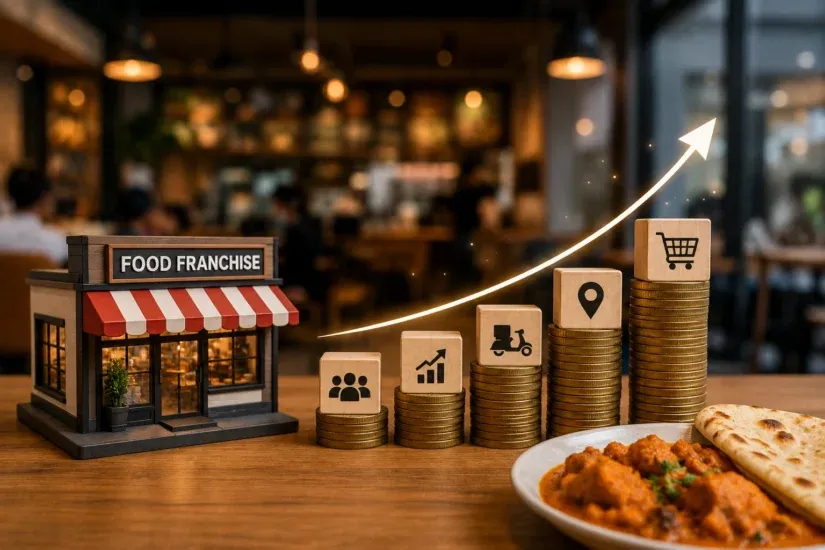
Starting a food business once meant finding a large commercial property, building a full kitchen, investing heavily in interiors, and depending mainly on walk-in customers. That model still exists, but new franchise formats have created more flexible ways for entrepreneurs to enter the food industry.
Today, investors can choose between dine-in concepts, takeaway counters, health-focused outlets, delivery-led kitchens, and compact speciality formats. Each option comes with different costs and operating requirements. Understanding these differences is important before choosing a model simply because the food category appears popular.
Changing Customer Food Preferences
Consumers are becoming more selective about what they eat. Convenience still matters, but ingredients, hygiene, portion size, freshness, and nutritional balance increasingly influence purchasing decisions.
This shift has helped create opportunities for healthy food franchises that focus on meals or snacks positioned around healthier eating habits. Such concepts may attract office workers, students, fitness-conscious customers, families, and people looking for alternatives to conventional fast food.
However, a health-focused label alone does not guarantee demand. The menu must suit local tastes and remain competitively priced. Customers may appreciate healthier choices but still expect good flavour, convenience, and reasonable portions.
Delivery Models Need Less Frontage
Another major change in the food business is the growth of delivery-focused operations. A cloud kitchen does not depend heavily on premium frontage or large dining areas because most orders are generated through online channels.
Entrepreneurs researching the Best Cloud Kitchen Franchise should therefore compare operating systems rather than only brand visibility. Kitchen efficiency, menu suitability, delivery radius, packaging, food preparation time, and digital order management can have a major impact on performance.
A lower requirement for customer-facing space can reduce certain property expenses, but it does not remove business costs. Rent, staff, equipment, utilities, ingredients, packaging, platform commissions, advertising, and working capital must still be considered carefully.
Location Still Plays a Role
Even a delivery-oriented business needs the right location. Instead of looking mainly for pedestrian traffic, cloud kitchens need access to densely populated residential areas, offices, colleges, or other zones with consistent online ordering activity.
Delivery time is particularly important. A location that appears inexpensive may become less useful if most target customers are too far away. Longer delivery journeys can affect food quality, delivery charges, and customer satisfaction.
For health-oriented physical outlets, visibility may be more important. Entrepreneurs should study nearby gyms, offices, schools, residential communities, hospitals, and commercial areas to understand whether sufficient demand exists.
Menu Design Influences Operations
Food businesses often become difficult to manage when menus are too large. Every extra item can mean additional ingredients, preparation processes, equipment requirements, and inventory risks.
A focused menu can simplify purchasing and help staff maintain consistent quality. It may also reduce food wastage because fewer ingredients need to be stocked.
Franchise investors should ask how frequently menus are updated and whether regional preferences can be accommodated. Standardisation is valuable in a franchise, but some flexibility can help a concept fit local consumer behaviour.
Calculate the Real Unit Economics
Before investing, calculate how much each order actually contributes after variable expenses. Ingredient costs are only one part of the calculation. Packaging, discounts, delivery-platform charges, taxes, payment fees, and wastage can all reduce margins.
Fixed expenses should then be added separately. These include rent, salaries, electricity, software, maintenance, franchise-related charges, and local promotion.
Instead of relying on an estimated sales figure, test multiple scenarios. Calculate what happens if daily orders are lower than expected during the first few months. A conservative forecast can reveal whether sufficient working capital is available.
Study the Franchise Support
Operational support can be especially useful in the food sector because consistency is difficult to maintain. Investors should understand whether the franchisor assists with site selection, kitchen layout, supplier sourcing, staff training, recipes, technology, launch marketing, and ongoing quality checks.
The agreement should also clearly explain fees, territory, renewal terms, supply obligations, branding rules, and exit conditions.
Speaking with existing franchise operators can provide additional perspective on day-to-day challenges that may not be obvious during the initial sales discussion.
Conclusion
Modern food franchising offers more formats than traditional restaurant ownership. Health-focused outlets and delivery-led kitchens can both create interesting opportunities, but they require different approaches to property, customer acquisition, staffing, and operations.
A sensible investor should compare the total setup cost, local demand, realistic order volumes, margins, support systems, and working-capital needs before choosing any model. The right format is not necessarily the most fashionable one; it is the one that fits the local market and can be operated consistently over time.
